This Driveway Cleaning article is written for Melbourne owners and managers who need more than a quick blast. Driveway Cleaning jobs in our city require a surface diagnosis before any cleaning starts.
In Melbourne, everything from growth corridor new-build mortar smear to inner-suburb heritage brick has its own cleaning risk profile. The right method, chemistry and pressure keep the surface safe and the result lasting.
Visual clues on Melbourne driveways
Engine oil usually forms dark, irregular patches under the engine bay that feather into pores. Hot-tyre marks are curved arcs or patches where wheels stop and turn — common on pale exposed aggregate in suburban courts. Misreading one for the other wastes a visit.
Why oil needs draw, not just blast
Hydrocarbons sit in the slab. Surface degreaser helps fresh spills; aged drips often need poultice cycles. Blasting first spreads the halo into previously clean concrete, especially on porous plain grey slabs in older suburbs.
Why rubber needs dwell and rinse control
Rubber residues respond to the right degreaser contact time, then even rinsing with a surface cleaner. Excess pressure without chemistry burnishes marks into the texture of exposed aggregate and can scar the binder between stones.
Sealed versus unsealed slabs
Film sealers can whiten or peel with aggressive solvents. Penetrating sealers behave differently again. Always test on a discreet mark. Resealing may be part of finishing after either stain type if the existing coat is chalked.
Mixed messes under the same car
Many Melbourne garages show oil under the motor and rubber at the wheel stops. Treat as two micro-scopes on one visit: poultice or deep degrease for oil, rubber chemistry for arcs, then one even rinse pass so the slab tone matches.
What to send for a diagnosis quote
Dry photos of each stain type, a wide shot of the full drive, suburb, and whether the surface is exposed aggregate, plain concrete or stamped. Note if cars can be moved for overnight poultice dwell.
On the job
- Oil soaks into pores; tyre marks are often surface rubber transfer.
- Poultices suit deep oil; degreaser dwell suits many rubber arcs.
- Wrong solvent on sealed aggregate can damage the binder.
- Photos in dry daylight help diagnose before quoting.
Common questions
How can I tell oil from tyre marks?
Oil often sits as irregular patches under the engine bay; tyre marks are usually curved arcs where wheels stop or turn on pale aggregate.
Will one product fix both?
Not reliably. Deep oil may need poultice cycles while rubber marks respond better to degreaser dwell and controlled rinsing.
More guides
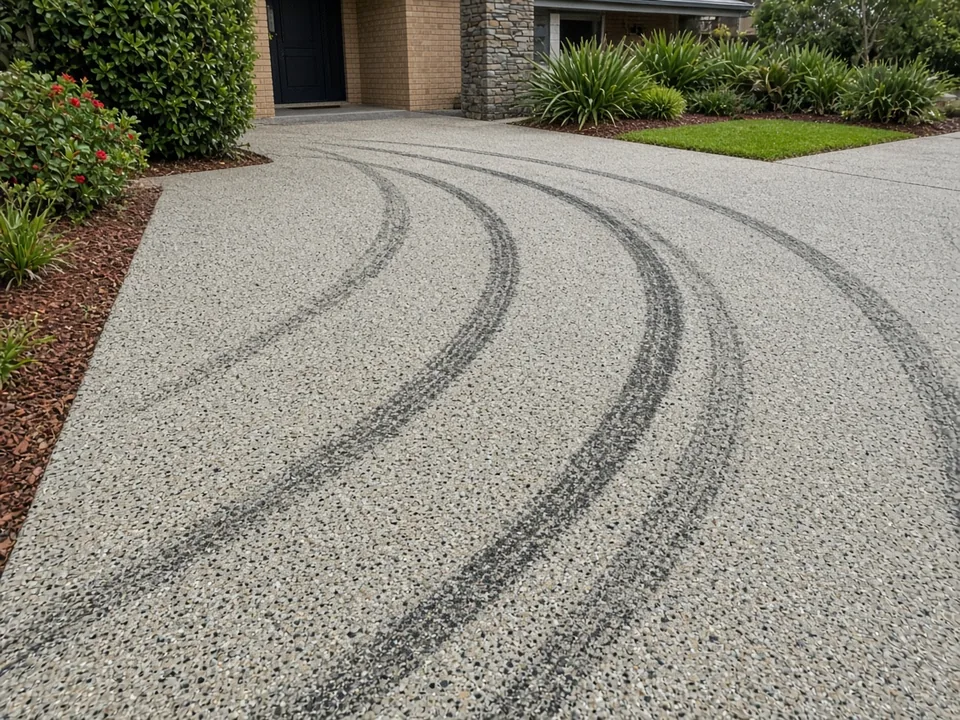
Removing Tyre Marks from Exposed Aggregate Without Etching the Binder
Hot tyre marks on exposed aggregate are stubborn. Wrong chemistry strips the binder and ruins the finish.
Read guide →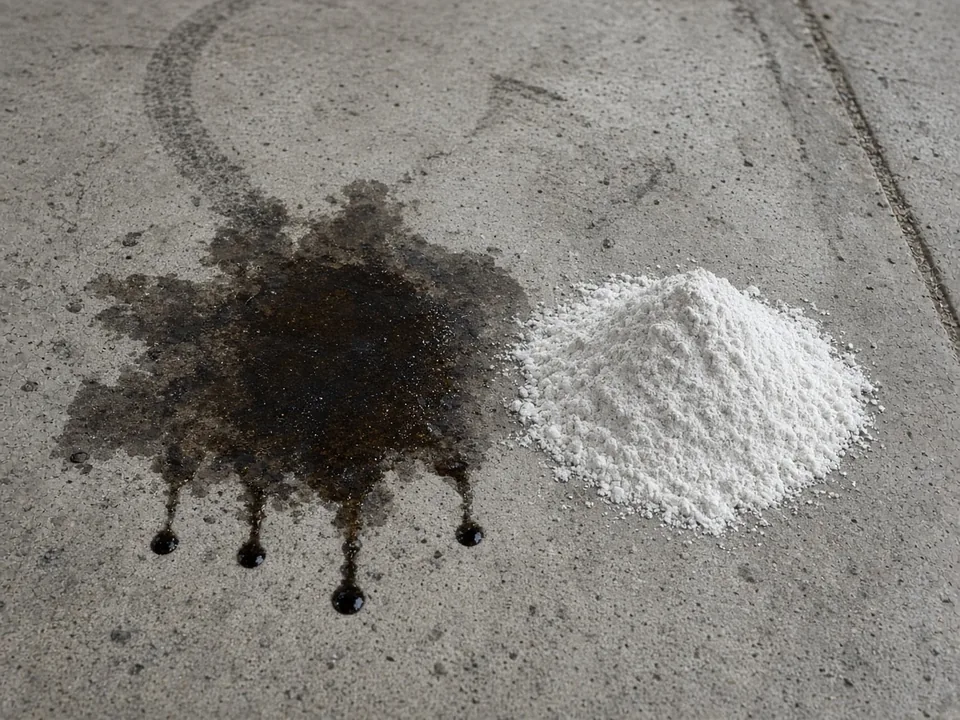
Oil Drip Removal: Poultice Methods That Actually Work
Why a clay poultice with solvent draws oil out of concrete pores rather than just cleaning the surface.
Read guide →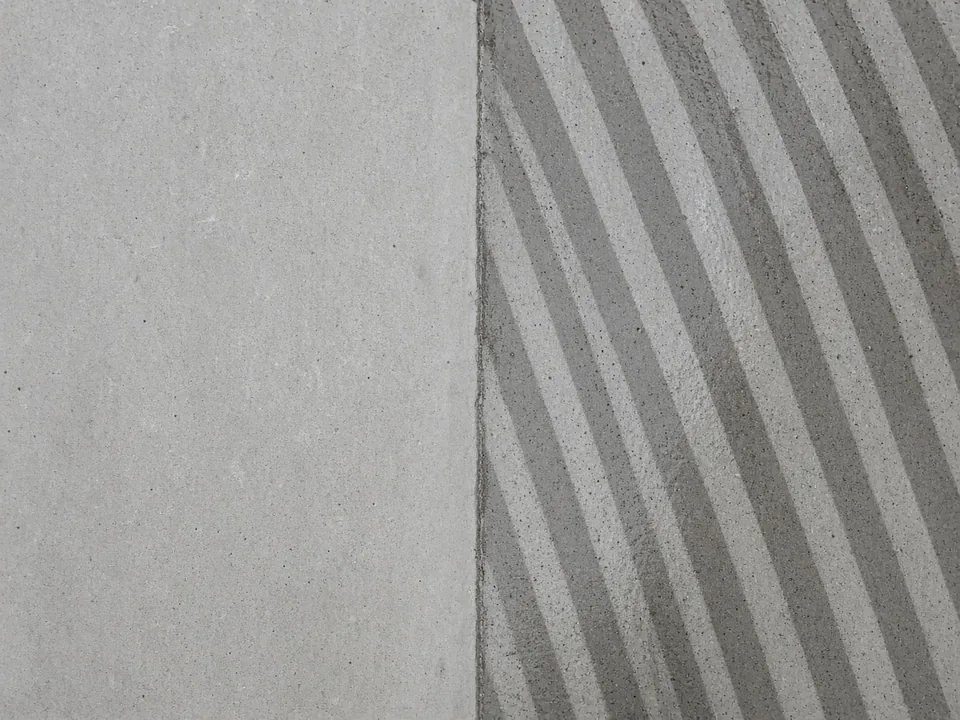
Surface Cleaner vs Wand: When Each Tool Wins
A flat-surface rotary cleaner saves hours on driveways but a wand is essential for edges, walls and detailed work.
Read guide →