This Driveway Cleaning article is written for Melbourne owners and managers who need more than a quick blast. Driveway Cleaning jobs in our city require a surface diagnosis before any cleaning starts.
In Melbourne, everything from growth corridor new-build mortar smear to inner-suburb heritage brick has its own cleaning risk profile. The right method, chemistry and pressure keep the surface safe and the result lasting.
Why surface degreasers stall on deep oil
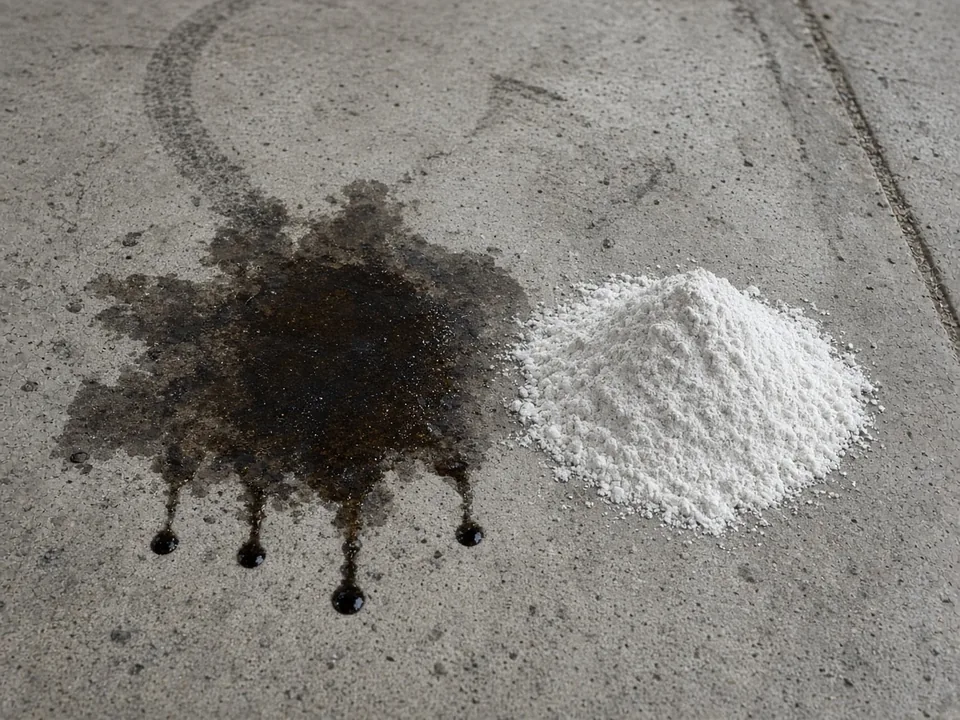
Engine drips on Melbourne garages and driveways soak into capillary pores. A fast detergent wash cleans the face and leaves a shadow that reappears as the slab dries. Poultice methods exist because absorption beats rinsing when the oil sits below the surface skin.
How a poultice works
An inert absorbent — often a clay or similar powder — is mixed with a solvent suited to the stain, spread over the mark, and left to dry. As it dries it pulls oil upward into the paste. The dried cake is scraped and disposed of as contaminated waste, then the area is rinsed clean.
Time and warmth help the draw
Twelve to twenty-four hours of dwell usually beats a two-hour attempt. Dark slabs in summer heat accelerate drawing; cold winter mornings in the south-east suburbs slow it. Covering the poultice can reduce evaporation that is too fast on hot northerly days.
Repeat cycles on aged stains
Marks older than a year, or repeated parking drips in the same bay, often need two or three poultice cycles. Each pass lifts a layer. Promising a brand-new look in one hour on a decade-old stain sets everyone up for disappointment.
Pressure cleaning after, not instead
Once the poultice has done the deep work, a controlled rinse or light surface-cleaner pass removes residue. Starting with max pressure drives oil sideways into clean concrete and widens the halo. Sequence matters as much as product choice.
Site care and honest limits
Mask lawn edges, keep pets off drying paste, and never tip oily scrapings into the gutter. Some cured hydrocarbon stains never fully clear; sealing or a local overlay can be the practical finish. We say so before you book rather than after the rinse.
On the job
- Poultices draw oil out of pores; blasting mostly spreads it.
- Long dwell — often overnight — outperforms a quick degreaser rinse.
- Old stains commonly need two or three cycles.
- Contain oily waste; do not wash it into Melbourne stormwater pits.
More guides
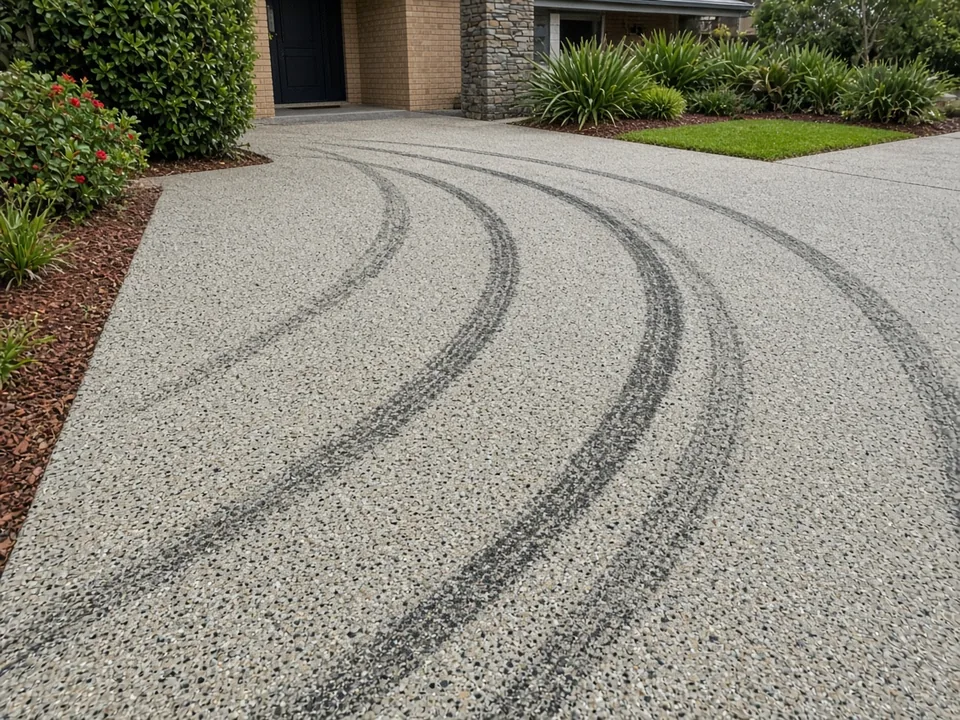
Removing Tyre Marks from Exposed Aggregate Without Etching the Binder
Hot tyre marks on exposed aggregate are stubborn. Wrong chemistry strips the binder and ruins the finish.
Read guide →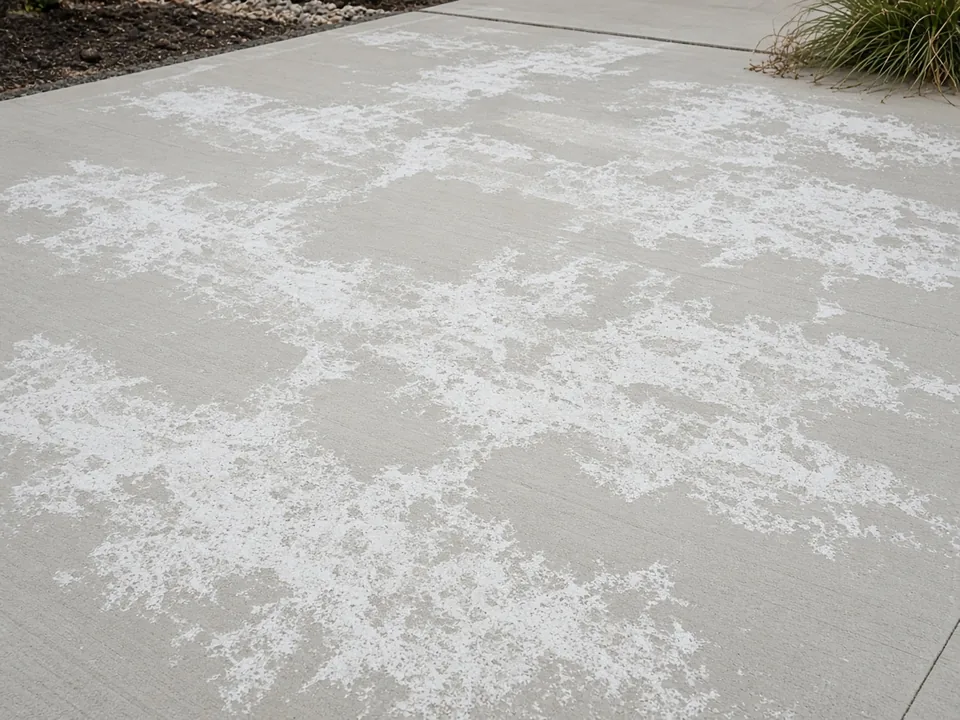
Driveway Efflorescence: Hot Rinse, Acid Wash or Just Rain?
White haze on your concrete driveway is salt — and timing your treatment matters.
Read guide →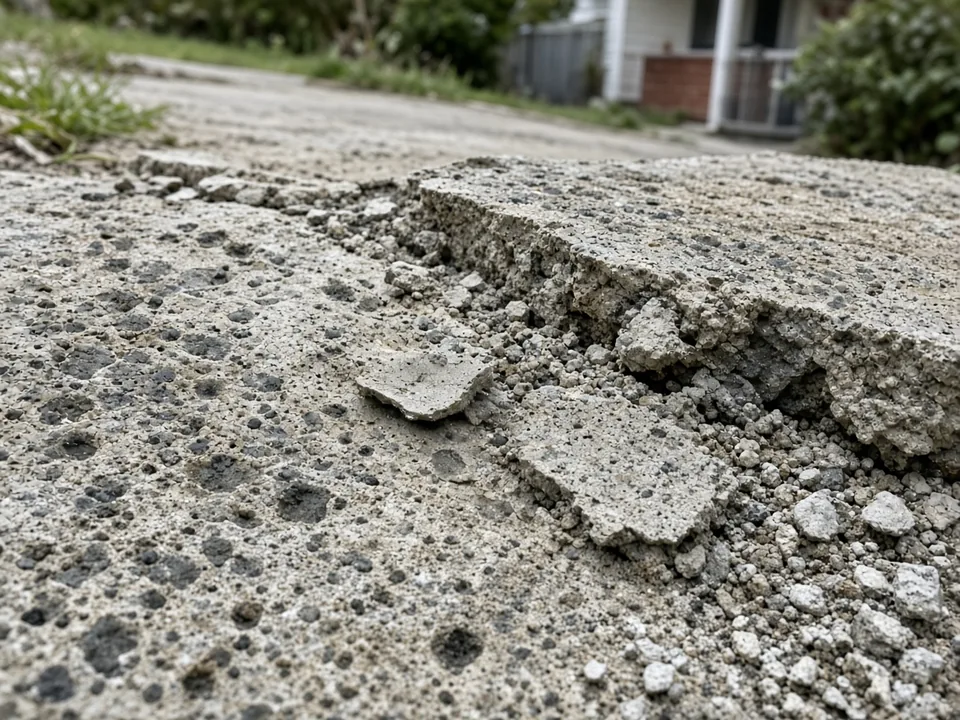
When Pressure Cleaning Wont Fix It (And What Comes Next)
Some staining and damage is past the cleaning stage. Heres how to recognise it.
Read guide →