This Brick Cleaning article is written for Melbourne owners and managers who need more than a quick blast. Brick Cleaning jobs in our city require a surface diagnosis before any cleaning starts.
In Melbourne, everything from growth corridor new-build mortar smear to inner-suburb heritage brick has its own cleaning risk profile. The right method, chemistry and pressure keep the surface safe and the result lasting.
Iron in the clay reacts visibly
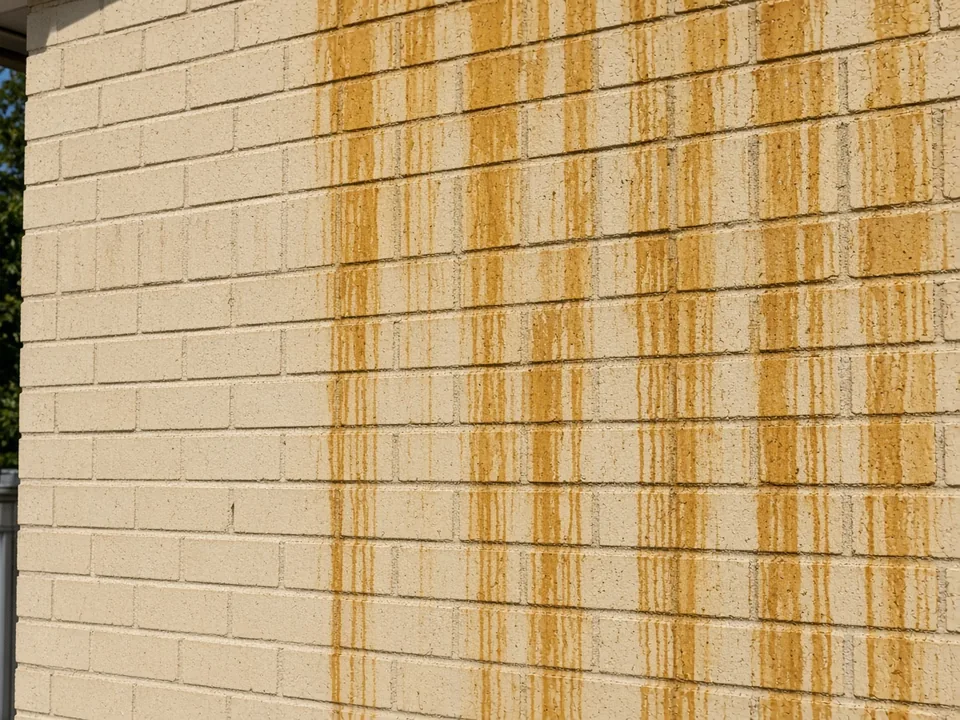
Many cream, ivory and buff clay bricks used across Melbourne's growth corridors contain iron oxides. When hydrochloric acid contacts those oxides, the reaction can leave rust-yellow streaks that run with the rinse water — the classic acid-burn pattern. The wall looked clean while wet and stained as it dried. That is chemistry, not dirt returning.
Tannin and timber framing complicate wet walls
Acid wash wets the full elevation. On two-storey homes with timber lintels, eaves or unfinished joinery above, tannin can leach down the face and leave brown tracks that look like burn. Soft-wash detergent systems keep the wall wet enough to clean without driving the same aggressive reaction into the clay.
Test before you trust any dilution
On unfamiliar cream brick, run a discreet 30×30 cm test panel, rinse thoroughly, and photograph it after 24 hours of dry weather. Melbourne's changeable spring and autumn light makes morning checks useful — haze and yellowing hide in flat afternoon shade. If the panel yellows, stop and change chemistry rather than scaling the same mix across the facade.
When mortar smear still needs treating
Skipping acid does not mean leaving smear forever. Organic acid blends, longer detergent dwell and careful agitation can lift fresh construction haze on many cream bricks. Stubborn smear on sensitive brick may need staged work over two visits rather than one aggressive wash day. The goal is even colour, not a single heroic blast.
Growth-corridor cream brick is high risk
Tarneit, Point Cook, Cranbourne and Clyde handovers often use popular cream face bricks. Volume builders run tight programmes, so cleaners are pressured to match red-brick dilutions. Resist that. Ask for the brick brand if known, share elevation photos, and insist on a written method before work starts — especially if scaffold is still up and access looks easy.
What to do if burn has already happened
Active acid needs an alkaline neutralising rinse first. Iron staining may then need oxalic or specialist restoration chemistry, blending and time. Not every burn fully reverses. Document the elevation before further work and treat restoration as a separate scope from a standard new-build wash.
On the job
- Cream and buff bricks often contain iron that reacts with hydrochloric acid.
- A dry 24-hour test panel is cheaper than reversing acid burn.
- Soft-wash or organic-acid systems are often safer than a standard HCl wash.
- Send brick brand photos and suburb notes before anyone mixes acid on site.
Common questions
Why do cream bricks yellow after acid?
Iron in the clay can react with hydrochloric acid and leave rust-coloured streaks. That is acid burn, not dirt.
Should every cream brick job get a test panel?
Yes. A small discreet panel checked after it dries is the safest way to choose dilution or switch to non-acid chemistry.
More guides
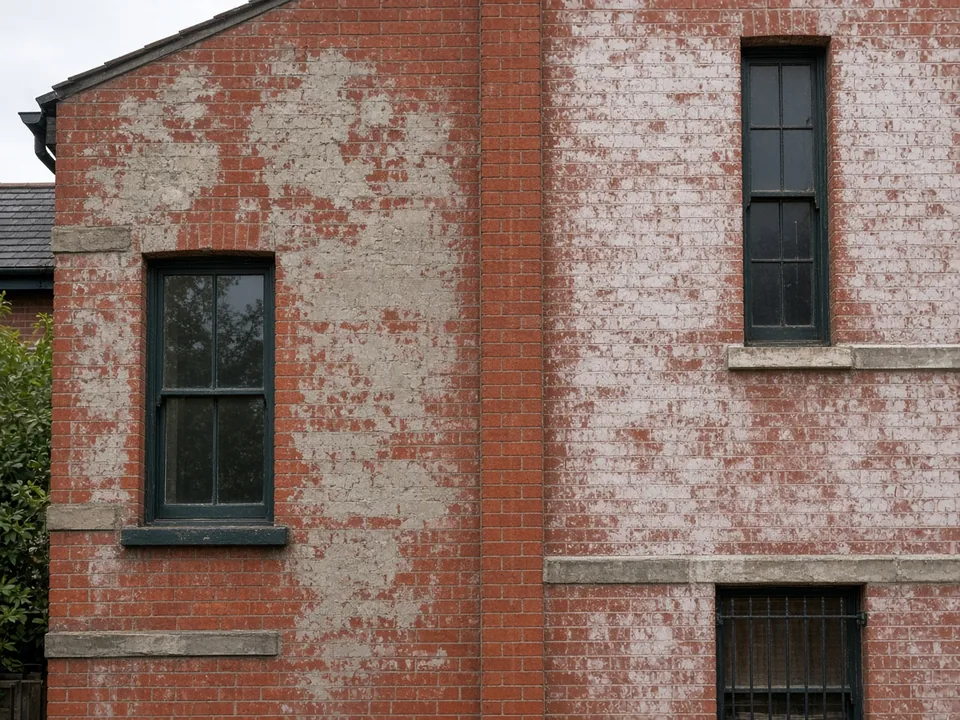
Mortar Smear vs Efflorescence: How to Tell Them Apart on Melbourne Brick
Both look like white haze on brick, but the chemistry, cause and removal method are completely different. Here is how Melbourne owners can tell them apart.
Read guide →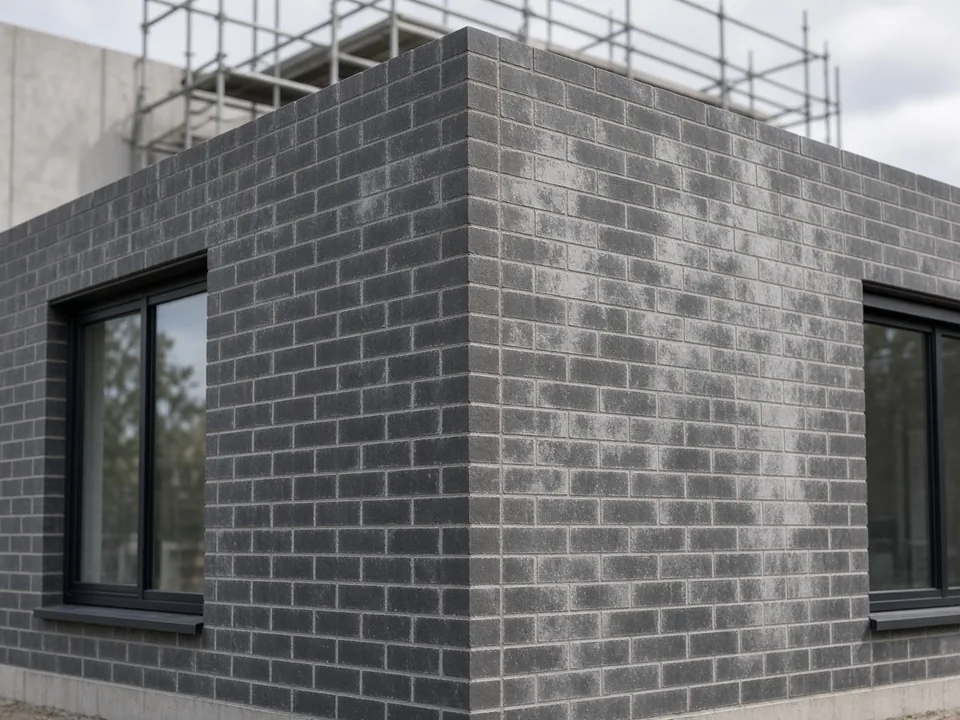
New Build Brick Haze: The 7–10 Day Window for an Optimal Clean
Why builders book a new-build brick clean 7–10 days after laying for an optimal clean — and what happens if you wait longer.
Read guide →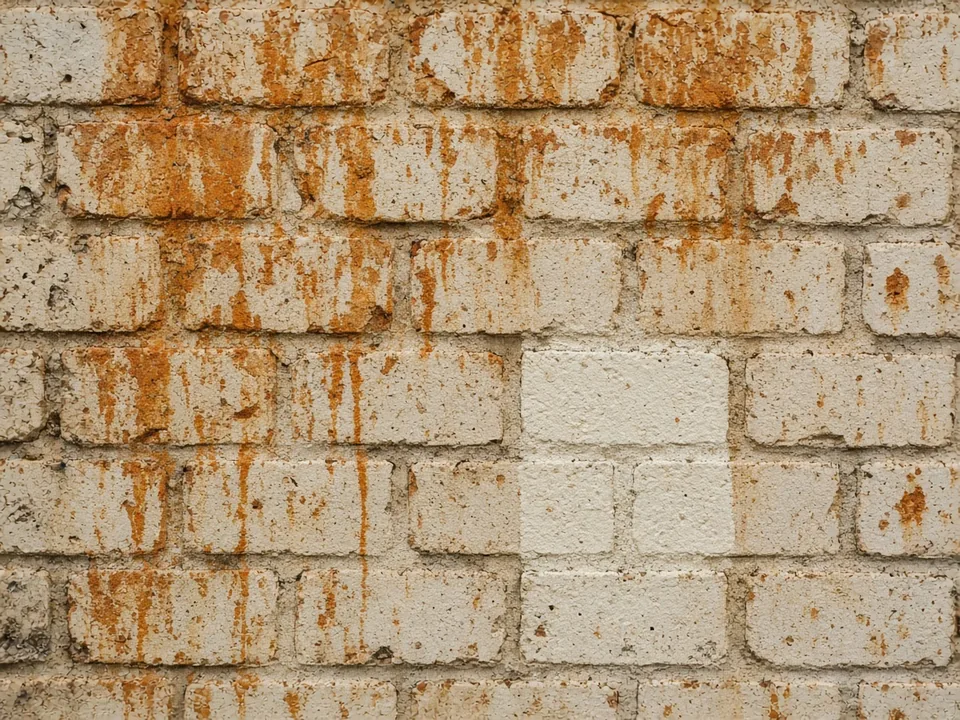
Brick Acid Burn Repair: A Step-by-Step Melbourne Case Study
A real Melbourne acid burn restoration job: diagnosis, neutralisation, oxalic treatment and stain blending.
Read guide →