This Pressure Cleaning article is written for Melbourne owners and managers who need more than a quick blast. Render Cleaning jobs in our city require a surface diagnosis before any cleaning starts.
In Melbourne, everything from growth corridor new-build mortar smear to inner-suburb heritage brick has its own cleaning risk profile. The right method, chemistry and pressure keep the surface safe and the result lasting.
Painted surfaces do not survive blasting
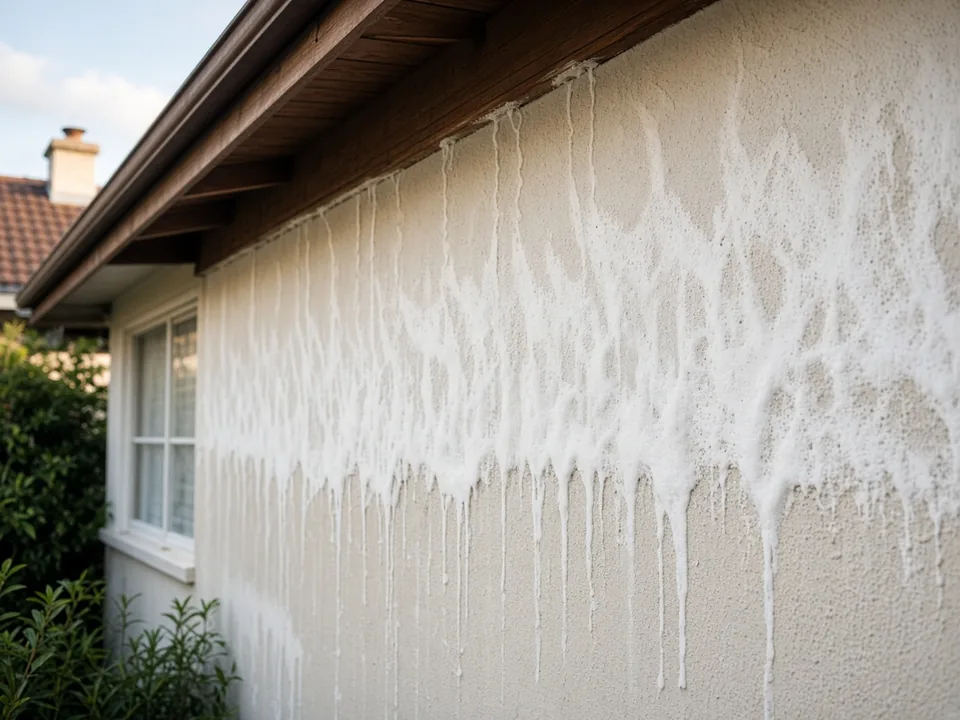
Most modern Melbourne render finishes carry an acrylic or texture coat. Full-pressure wands lift paint edges, force water behind the film and leave chalky patches that look worse after they dry. Soft wash uses chemistry and dwell so the rinse can stay gentle.
Soft wash means chemistry first
A genuine soft wash applies detergent or biocide, allows contact time, then rinses at low pressure — often in the 300–500 PSI range. If a quote only mentions machine size and never dwell time, you are probably buying a pressure wash with a soft-wash label.
Mix rates matter for organic growth
South-facing render in suburbs like Brunswick, Camberwell and Mentone grows mould and algae in winter shade. Too-weak biocide bleaches green temporarily; too-strong mixes can streak paint. Correct dilution plus dwell, then a controlled rinse, is what keeps growth down through the next wet season.
When higher pressure still has a place
Bare cement paths, untreated concrete aprons and some masonry plinths below render can take surface-cleaner work after the facade soft wash. Keep zones separate: finish the painted elevation first, protect weep holes and sills, then move equipment to hard surfaces so overspray does not hit fresh paint edges.
Mixed brick and render walls
Many Melbourne homes mix bagged or rendered bases with face brick above. Acid suitable for brick will attack acrylic binders. Plan zoned cleaning — soft wash the render, brick chemistry on the masonry — with masking and rinse control at the junction lines.
What to ask before you book
Ask maximum rinse pressure, detergent type, plant protection and how they will check for failed paint before starting. Loose or chalking coatings should be noted in writing; cleaning will not glue failing paint back on, and honest scopes say so up front.
On the job
- Painted acrylic render usually needs soft wash, not a high-pressure blast.
- Genuine soft wash is low pressure plus detergent dwell — typically under about 500 PSI.
- Biocide mix rate decides whether mould is killed or only temporarily bleached.
- Mixed brick-and-render facades need zoned methods on the same visit.
More guides
PSI Explained: Why 4000 PSI Doesn’t Mean Cleaner Concrete
The relationship between pressure, flow rate, nozzle and dwell time decides cleaning power — not the headline PSI alone.
Read guide →
Render Cleaning: Removing Organic Growth Without Paint Damage
Soft-wash chemistry kills mould and lichen on render without the paint flaking.
Read guide →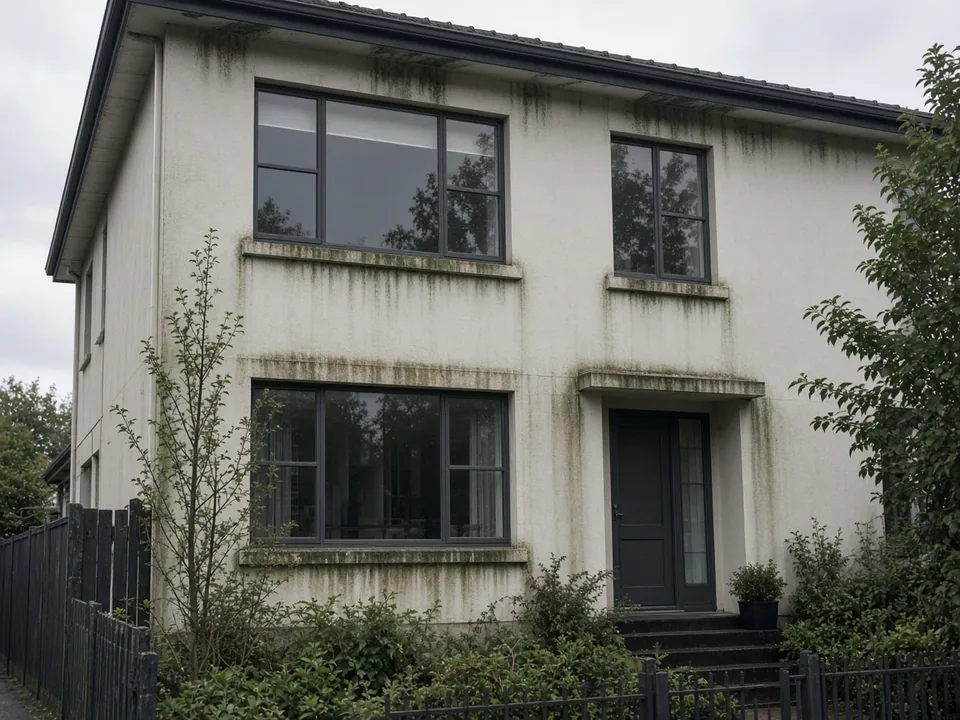
Render Cleaning Cost in Melbourne 2026: What Affects the Price
Realistic Melbourne price ranges for render and painted exterior cleaning in 2026 — with the specific factors that shift quotes up or down.
Read guide →