Keilor 3036 · North-West Melbourne
Brick Cleaning in Keilor
Large hard-surface areas and pool surrounds build up dirt, algae and tyre marks over time. Acid washing for mortar haze, salts and post-build smear on Melbourne brick. Cream and buff brick gets a test panel before we mix anything stronger.
- Written fixed-price quotes
- Quotes from your photos
- Test panel on unfamiliar brick
or call 0405 477 173
- Quoted from photosSend photos, get a written fixed price
- Written fixed priceThe full price before we start
- Test panel firstOn cream, heritage and unfamiliar brick
- Keilor 3036North-West Melbourne · City of Brimbank
Brick Cleaning for Keilor properties
Keilor is an established suburb along the Maribyrnong valley with large brick family homes, long driveways and generous paved areas.
Specialist brick cleaning across Melbourne — post-build acid washes, mortar smear removal, efflorescence treatment and brickwork restoration. We diagnose the brick type and the staining cause before we mix chemistry, because the wrong dilution on cream brick or heritage lime mortar leaves permanent damage that another wash cannot fix. Most Melbourne brick cleaning jobs are post-construction handovers in the western and northern growth corridors — Tarneit, Sunbury, Rockbank, Wyndham Vale and Craigieburn. We also handle established and heritage brickwork in Toorak, Hawthorn, Kew and the inner suburbs where conservative methods are mandatory.
Brick cleaning is a chemistry job, not a pressure job. Get the dilution wrong and the wall is finished.
Hydrochloric acid at 1:10 dilution lifts fresh mortar smear from red clay brick cleanly. The same solution on cream or buff brick reacts with iron compounds in the clay and leaves rust-yellow streaking that runs the full height of the wall. The same solution on heritage lime mortar etches the joints and accelerates spalling. Every wall is assessed first — brick type, age, mortar type, staining cause — and the chemistry is mixed to suit. We test a discreet 30×30cm panel where the brick is unfamiliar and check the result 24 hours later in dry weather before we work the elevation.
- Test panel mandatory on cream, buff and heritage brick before production work
- Acid dilution matched to brick type — not a default 1:10 on every wall
- Bicarbonate neutralising rinse stops the acid reaction at the right point
- Pre-wetting of glass, frames and landscaping before chemistry hits
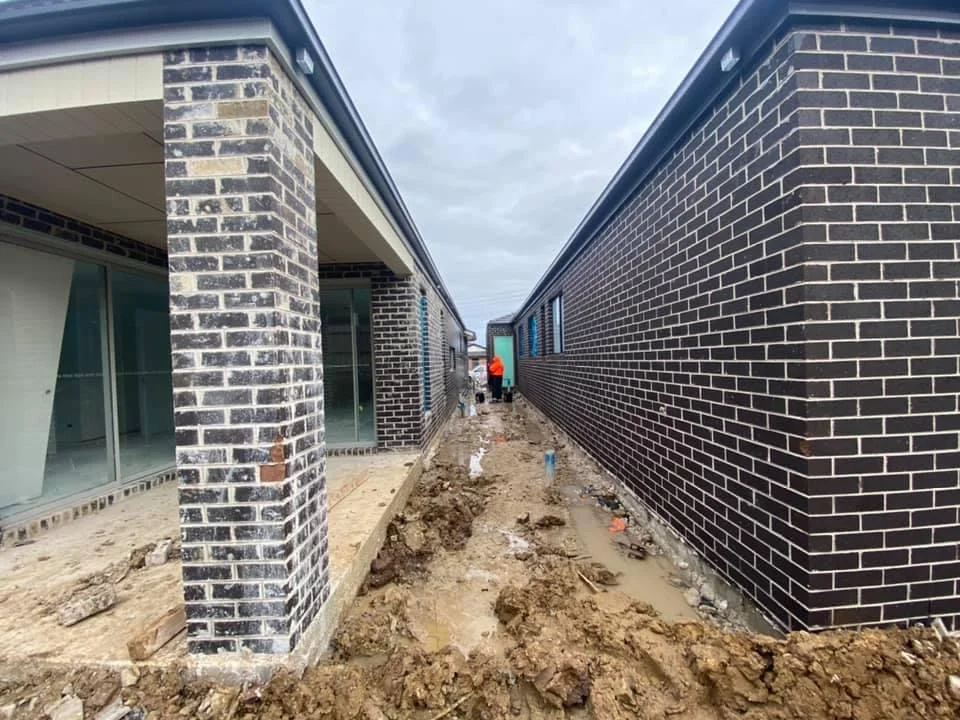
Brick cleaning Melbourne — post-build, maintenance, and restoration
Most brick cleaning enquiries fall into three diagnostic categories. The wall is either freshly built and carrying mortar smear, weathered and carrying decades of grime and salts, or already damaged from a previous incorrect clean. The right approach is different in each case.
Post-build mortar smear removal — the 6-week window
Fresh mortar smear is the most common brick cleaning job in Melbourne. Within six weeks of bricklaying, mortar residue is still relatively soft and porous and lifts cleanly with a 1:10 hydrochloric dilution, scouring brush agitation and a high-pressure rinse. After three months, the mortar carbonates harder into the brick face and stronger acid is needed — which raises the burn risk on cream and buff brick. Smart builders book the clean before painters do touch-ups so scaffolding is still up and the brick is the only thing being cleaned. We work directly with site supervisors on volume-builder estates across the western growth corridor.
Acid washing for stubborn staining and post-rain mortar haze
Walls cleaned three to six months after handover, or walls that have sat through a Melbourne winter unfinished, carry harder mortar deposits and need more careful work. We use measured acid application, longer dwell on the smear and a thorough neutralising rinse to lift the staining without overworking the face of the brick. On cream brick we drop the dilution and run a test panel before any production work. The aim is a cleaner wall with the brick face intact — not a stripped, etched or yellowed surface that a second contractor has to fix.
Maintenance brick cleaning — algae, pollution film and salt blooms
Established Melbourne brickwork — homes from the 1980s through 2000s — collects organic growth, pollution film and seasonal efflorescence (white salt migrating out of the mortar joints after wet weather). Pre-1985 homes often use lime-based mortars that cannot tolerate full pressure or strong acid. We assess the wall age, the porosity of the brick and the staining pattern before choosing between detergent soft-wash, controlled low-pressure rinse or a conservative dilute acid clean. Throwing maximum pressure at every wall is what generalist pressure cleaners do — and what costs you mortar joints in the long run.
Heritage brick cleaning in Toorak, Hawthorn, Kew and the inner suburbs
Heritage brickwork in Melbourne's premium inner suburbs uses dark red Hawthorn brick or hand-made Victorian-era brick, set with lime-based mortar that pre-dates Portland cement. Standard cleaning methods will erode the joints, expose the brick edges and create a sand-washed look that cannot be reversed without repointing. Conservative chemistry, soft brushing and chemical-only methods are standard. Many inner suburbs sit under heritage planning overlays — confirm scope with council before any chemical or mechanical treatment, especially on street-facing facades.
Efflorescence — different cause, different treatment
Efflorescence looks like white haze on the brick face but is fundamentally different to mortar smear — it is soluble salt drawn out of the mortar joints by moisture, often appearing in patches after wet weather and sometimes returning seasonally. Acid washing fresh efflorescence neutralises the visible bloom but locks more salt deeper in the wall, which then re-emerges later. Brushing, water rinsing and a controlled neutralising treatment work better for fresh efflorescence than aggressive acid. We diagnose first — wrong call here means the white haze comes back in three months.
What We Do
- Mortar stain removal
- Controlled brick acid washing
- Acid burn prevention
- Heritage-safe chemistry
- Builder final cleans
- Cream brick test panels
What We Won't Do
- Full-strength acid on cream or buff brick
- Acid on painted brick or render
- A clean with no test panel on unfamiliar brick
How We Do It
- 1
Photo assessment and diagnosis
Send wide shots of each elevation plus close-ups of the staining, the brick type and the mortar joints. We identify the brick (red clay vs cream/buff vs heritage), the staining cause (mortar smear vs efflorescence vs algae vs acid burn) and the right chemistry from the photos. We reply with a written fixed price.
- 2
Test panel where the brick is unfamiliar
On cream brick, heritage brick, or any unfamiliar brick type, we run a 30×30cm discreet test panel before working the elevation. The panel is checked 24 hours later in dry weather. If there is any colour shift, we drop the dilution or switch chemistry entirely.
- 3
Mix acid solution to brick type and staining age
Fresh mortar smear on red brick gets 1:10 hydrochloric. Older smear gets 1:8. Cream brick gets 1:20 or weaker. Heritage lime mortar gets soft-wash detergent only. The dilution is matched to the wall, not to a default setting.
- 4
Apply, agitate and rinse
Acid is applied bottom to top to prevent streaking, agitated with a scouring brush on the smear, given controlled dwell time and rinsed top to bottom under high pressure. Surrounding glass, frames and landscaping are pre-wetted and protected.
- 5
Neutralising rinse
A clean water rinse is followed by a bicarbonate or alkaline neutralising rinse to stop the acid reaction at the right point. Skipping this step is what causes salt blooms to re-emerge weeks later.
Real Spotless Results
Every image is a Spotless job.
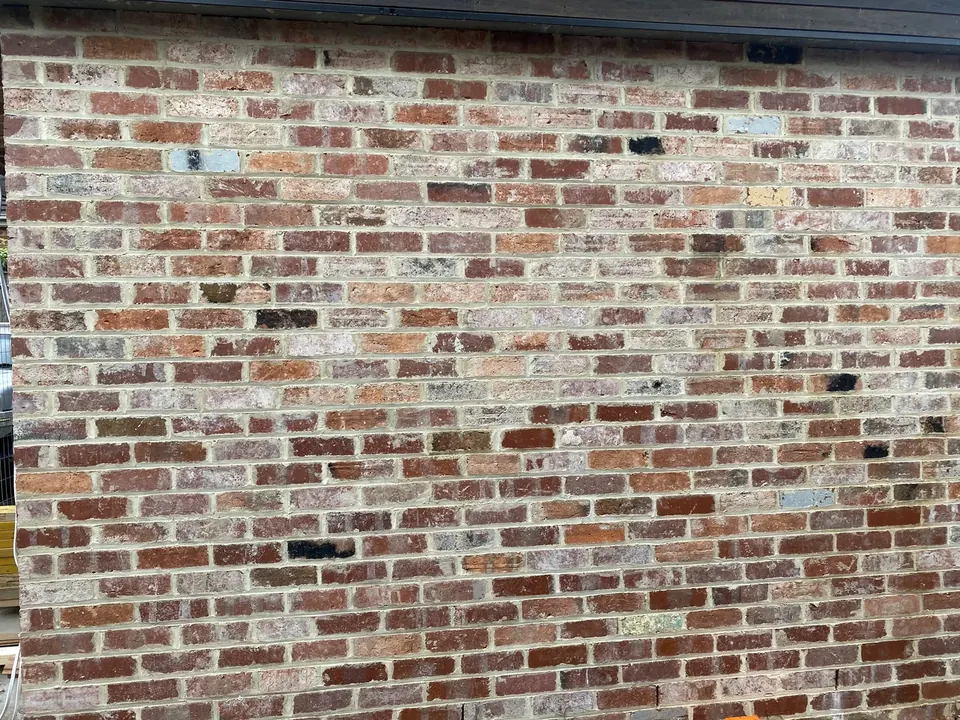
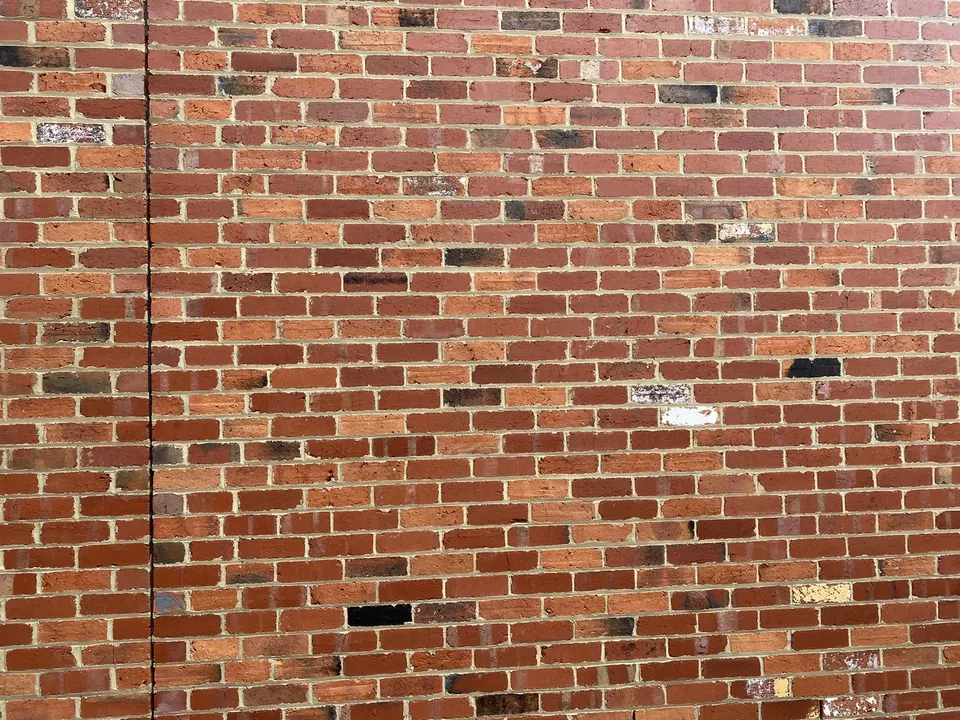 BeforeAfter
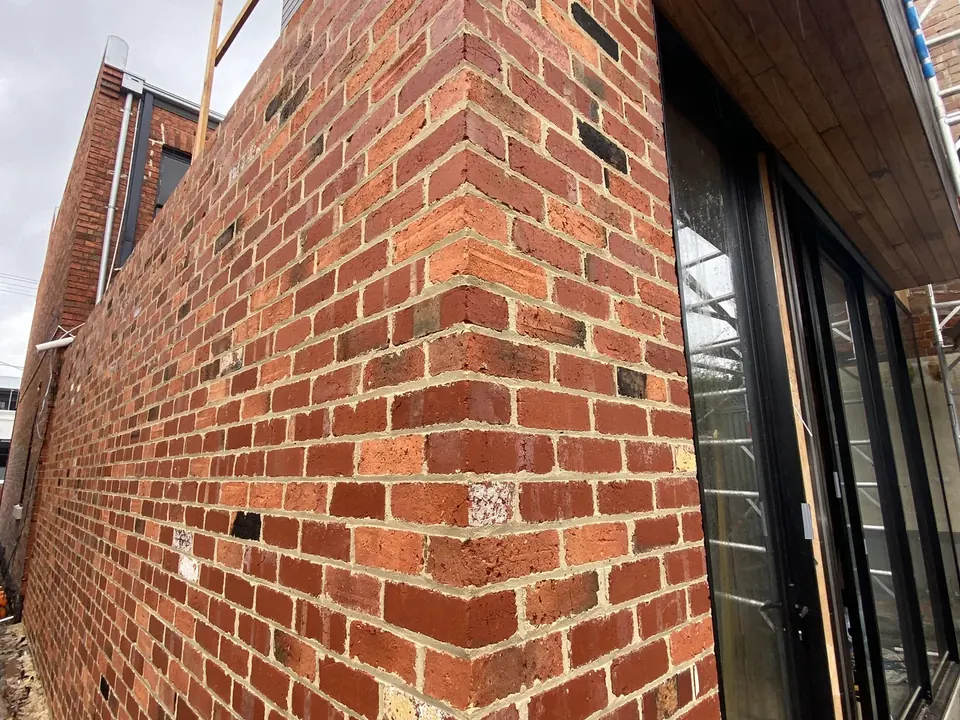
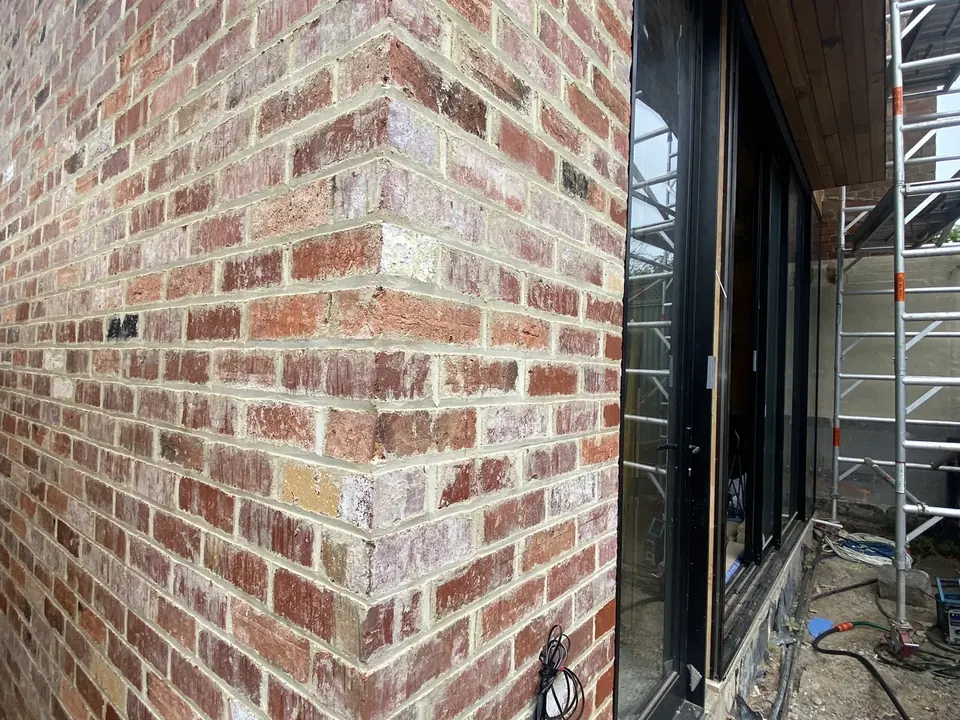 BeforeAfter
How Our Cleaning Transforms Surfaces
Drag to compare.
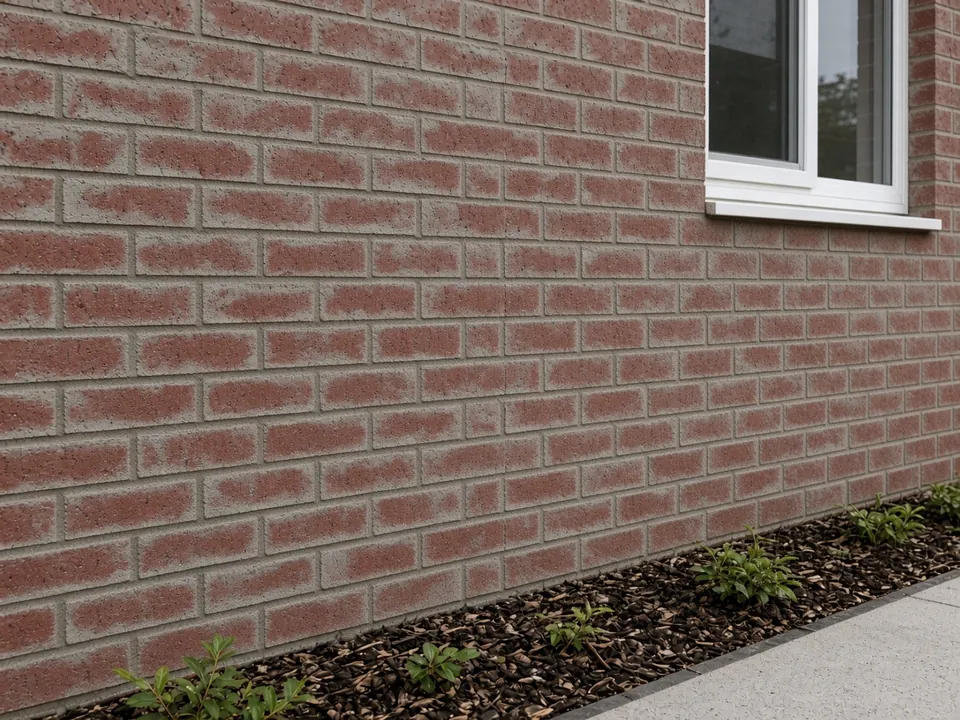
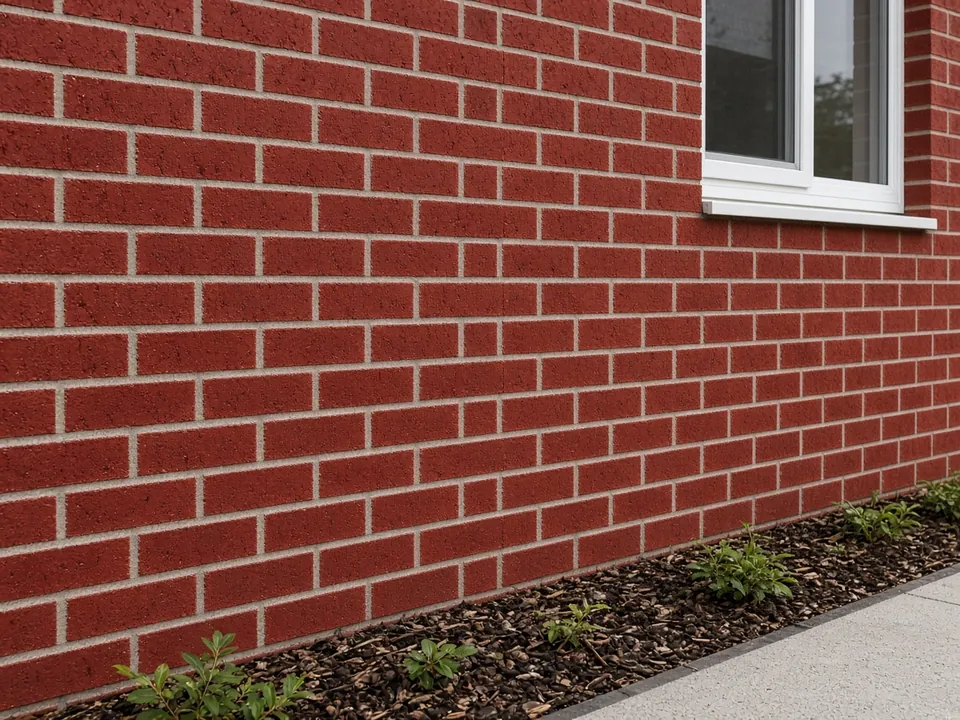 BeforeAfter
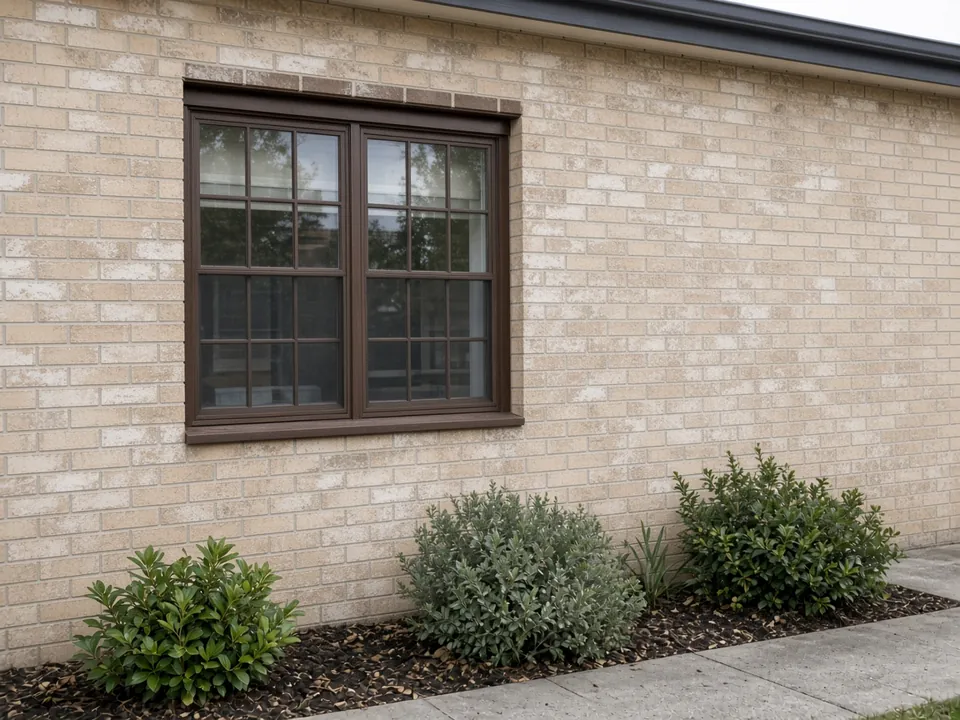
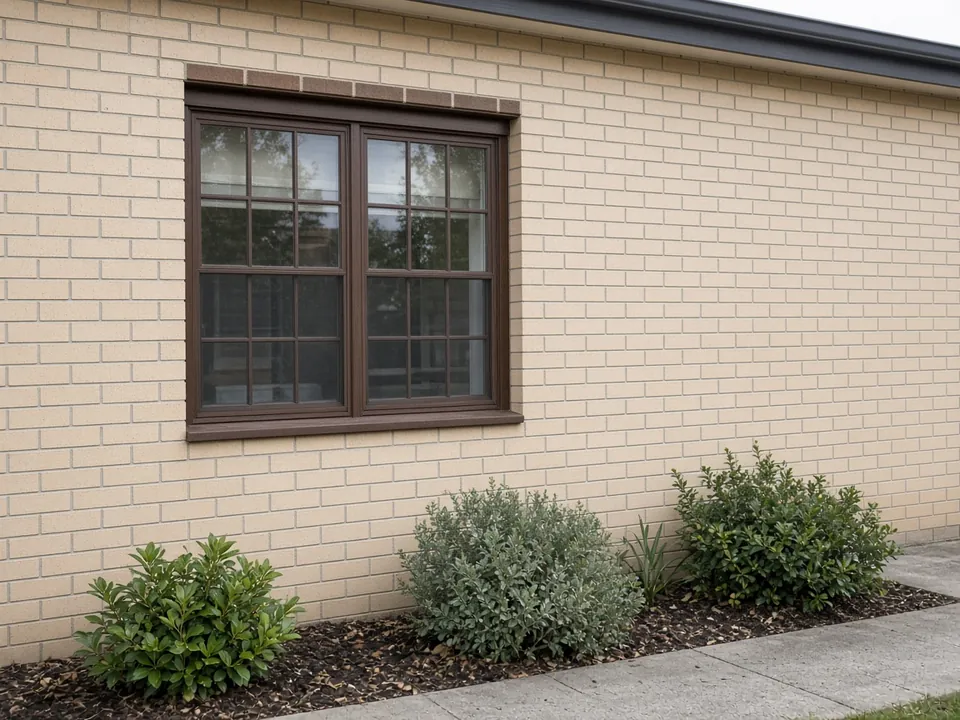 BeforeAfter
Surfaces We Work On
- 01
Cream and buff brick
High iron content reacts with HCl. Test panel mandatory. Use 1:20 dilution or non-acid soft-wash chemistry.
- 02
Hawthorn brick / heritage red brick
Pre-1900 walls often use lime mortar — soft-wash detergent only, no full pressure rinsing.
- 03
Painted or rendered brick
Acid attacks the paint binder. Soft-wash mandatory. Cleaning over-painted heritage brick is rarely worth attempting.
- 04
Bagged or rough-cast brick
Coating over a brick base. Soft-wash chemistry, low-pressure rinse, no acid.
- 05
Glazed face brick
Modern designer brick — non-porous. Standard cleaning, but acid pooling can mark the joint mortar.
DIY vs generalist cleaner vs specialist brick cleaning
| Factor | Quick job | Spotless |
|---|---|---|
| Surface diagnosis | Quick job: None — assumes one method works for all brick | Spotless: Test panel, brick type, staining age, dilution matched to wall |
| Acid handling | Quick job: Hardware-store muriatic acid at one strength | Spotless: Multiple HCl dilutions on hand, mixed per elevation |
| Cream brick risk | Quick job: High — yellow streaking common | Spotless: Test panel + reduced dilution + non-acid fallback chemistry |
| Neutralising rinse | Quick job: Skipped — water rinse only | Spotless: Bicarbonate neutralising rinse standard |
| Photo record and handover | Quick job: None | Spotless: Per-elevation photos, walk-through, COA file evidence |
When To Book
- Within 6 weeks of bricklaying complete — easiest clean, lowest acid strength, lowest burn risk
- Before painter touch-ups during builder handover — scaffolding still up, no overspray contamination
- After landscaping but before practical completion — driveways and paths cleaned in the same mobilisation
- Before listing a property for sale — facade presentation drives kerb appeal and inspection price expectations
- After a previous acid burn or failed clean — restoration assessment before further chemistry
- When efflorescence keeps returning — diagnosis of moisture source, not just surface treatment
Brick cleaning quote checklist
Send photos of the brick colour and type, wide shots of each elevation, close-ups of the staining or mortar smear, the wall height, scaffold or ladder access, and whether this is a post-build clean, a maintenance wash, or an existing acid burn issue. We can quote 80% of brick cleaning work from photos alone.
Send your photosWhat Melbourne Customers Say
Read our reviews on GoogleBrick Cleaning near Keilor
Get Your Fixed Price Today
Send a few photos of the job in Keilor and we reply with a written fixed price.
Call us
0405 477 173Service area
Keilor and surrounding suburbs
Brick Cleaning in Keilor: Questions
Do you do brick cleaning in Keilor?
Yes. We cover Keilor (3036) and nearby North-West Melbourne. Send a few photos and your address and we reply with a written fixed price.
How much does brick cleaning cost in Melbourne?
Every brick job is quoted as a written fixed price, because the work depends on wall area, storeys, access, the brick type and how long ago the bricks were laid. New builds are usually quoted per elevation; acid burn restoration and heritage work are scoped after we see close-up photos. Send wide shots of each wall and a close-up of the staining and we reply with a fixed price.
Is acid washing safe for cream or buff bricks?
Cream and buff bricks contain iron compounds that react with hydrochloric acid and leave rust-yellow streaking down the wall. This is acid burn — not cleaning — and it cannot be removed with another acid wash. For cream brick we test a 30×30cm discreet panel first, use a significantly weaker dilution (typically 1:20 or weaker compared to 1:10 for red brick), and check the panel 24 hours later in dry weather before proceeding. If the panel shows any colour shift we switch to non-acid soft-wash chemistry. Any quote for cream brick that does not mention a test panel should be questioned.
How long after the bricks are laid should the wash be done?
The optimal window is 4–6 weeks after bricklaying completes. The mortar smear is still relatively soft and porous, the cement has cured enough to handle pressure rinsing without joint damage, and the acid dilution required is at its weakest. After three months the mortar carbonates harder into the brick face and progressively stronger acid is needed — which raises the burn risk and the cost. After six months, restoration-grade methods may be needed for what should have been a routine clean.
Will brick cleaning damage the mortar joints?
Modern Portland cement mortar joints handle standard acid wash and pressure rinsing without damage when the chemistry is mixed correctly and the rinse is controlled. Pre-1985 lime-based mortar in established and heritage homes is much more fragile — full pressure and strong acid will erode the joint face, leave a sand-washed appearance and accelerate spalling. We assess the mortar age before choosing the method. If you can see joint sand washing out during the rinse, the cleaner has the wrong setup for that wall.
What is the difference between mortar smear, efflorescence and acid burn?
Mortar smear is residue left by the bricklayer — sand, cement and lime smeared across the brick face during construction. It is a building defect and lifts cleanly with acid. Efflorescence is white salt drawn out of the mortar joints by moisture, often appearing in patches after wet weather and sometimes returning seasonally — acid actually makes this worse long-term because it locks salt deeper in the wall. Acid burn is rust-yellow streaking caused by acid reacting with iron in the brick or with timber tannin from lintels above — this is irreversible damage requiring restoration, not cleaning. The treatment for each is completely different.
Can you clean painted brick or rendered brick?
Painted brick and rendered surfaces need soft-wash chemistry rather than acid — acid attacks the paint binder and pulls the coating off the substrate. We use detergent-based mould treatments with low-pressure rinsing (under 500 PSI) to clean painted surfaces without stripping the finish. Removing existing paint from heritage brick to expose the original face is a separate restoration process, often not fully reversible, and rarely worth attempting unless the paint is already failing.
Can old or weathered brickwork look new again after cleaning?
Most established brickwork improves significantly — pollution film, organic growth, and surface staining all reduce strongly. Whether the wall looks brand new depends on what is on the brick versus what is in the brick. Mortar smear, algae and pollution film come off completely. Iron staining from old acid burn, deep weathering, and embedded grime in heavily textured brick may improve dramatically without disappearing entirely. We set realistic expectations from the photos before the work starts.